NIĞDE STADIUM
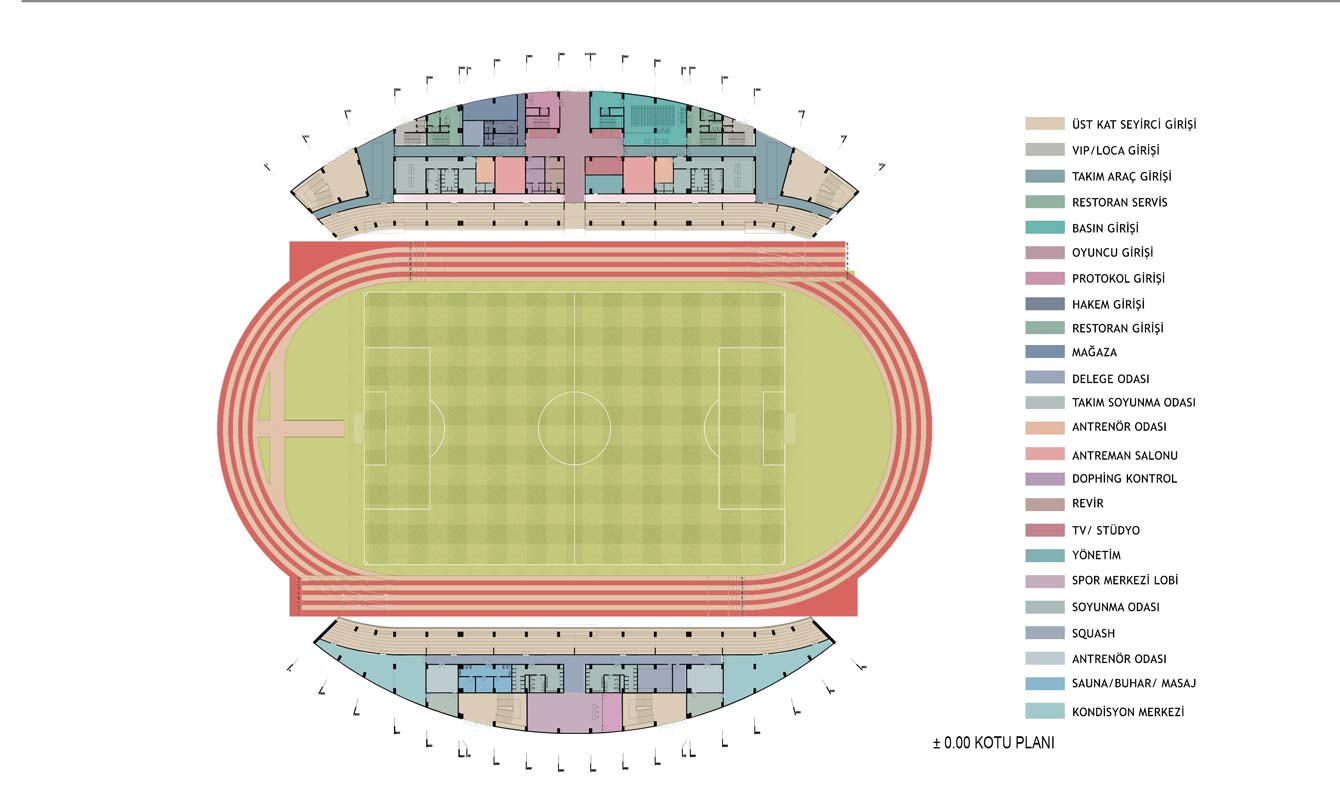
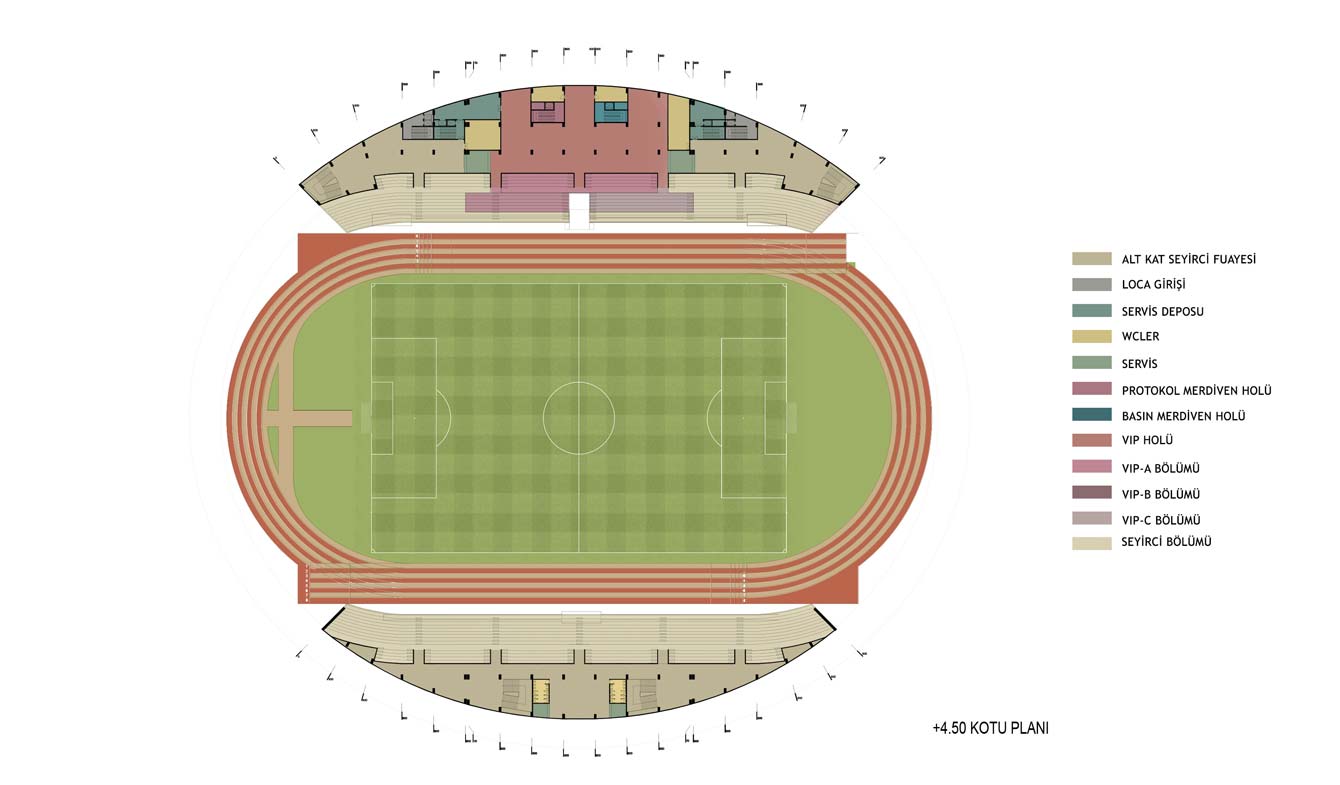
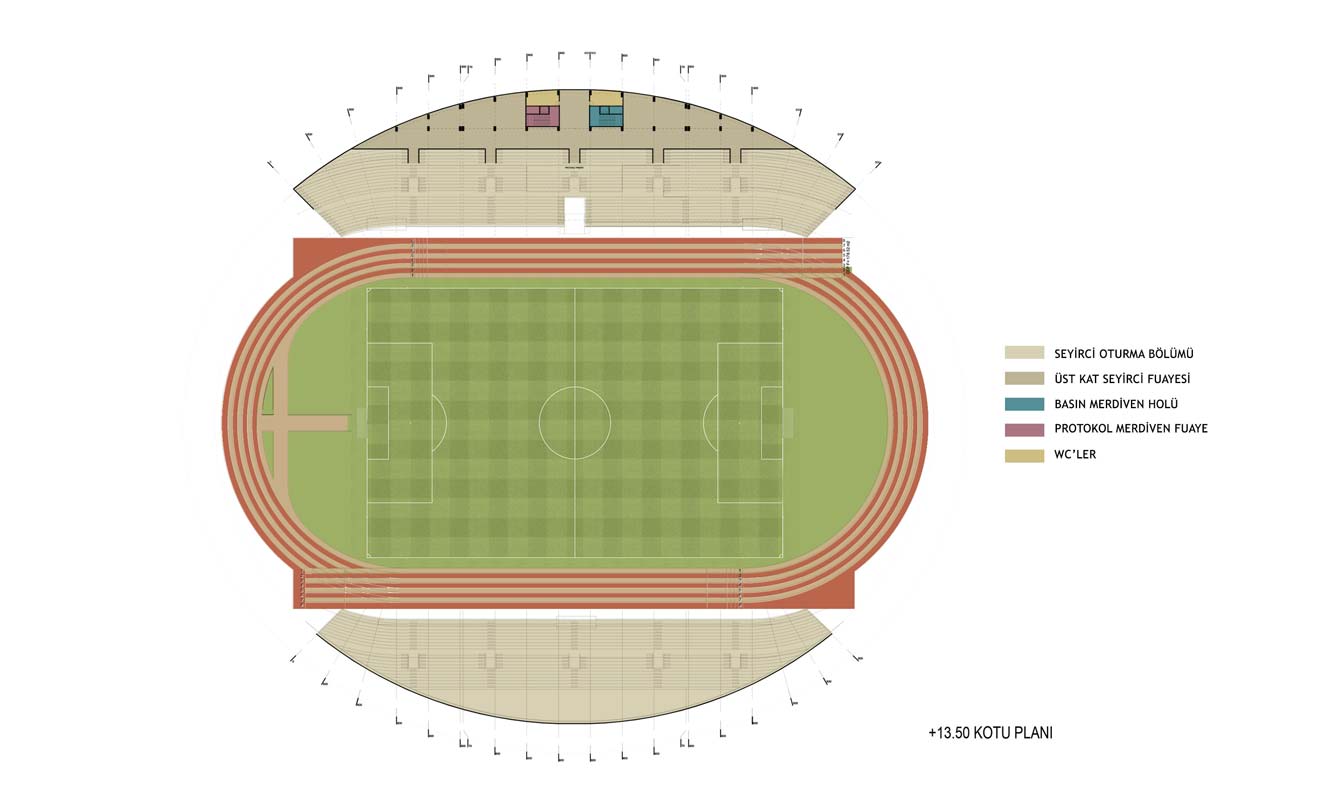
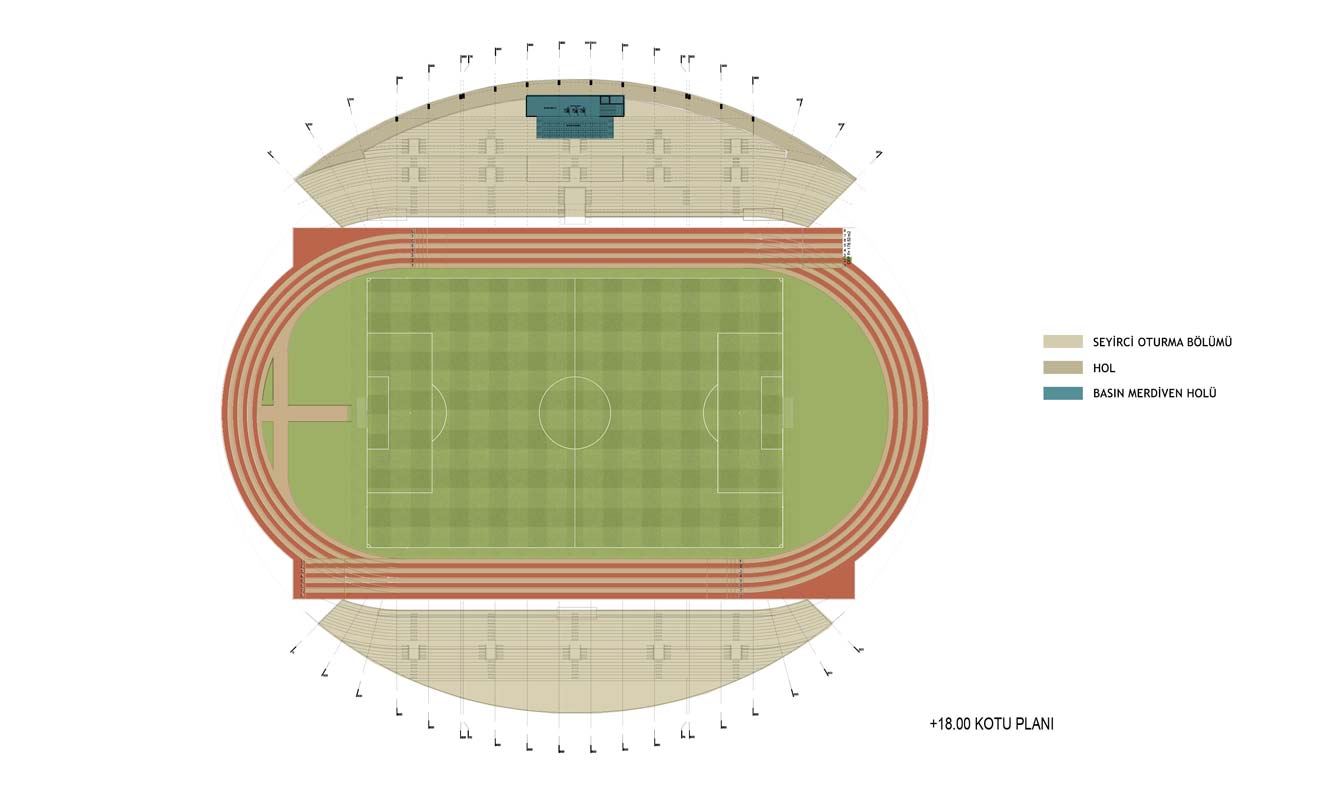
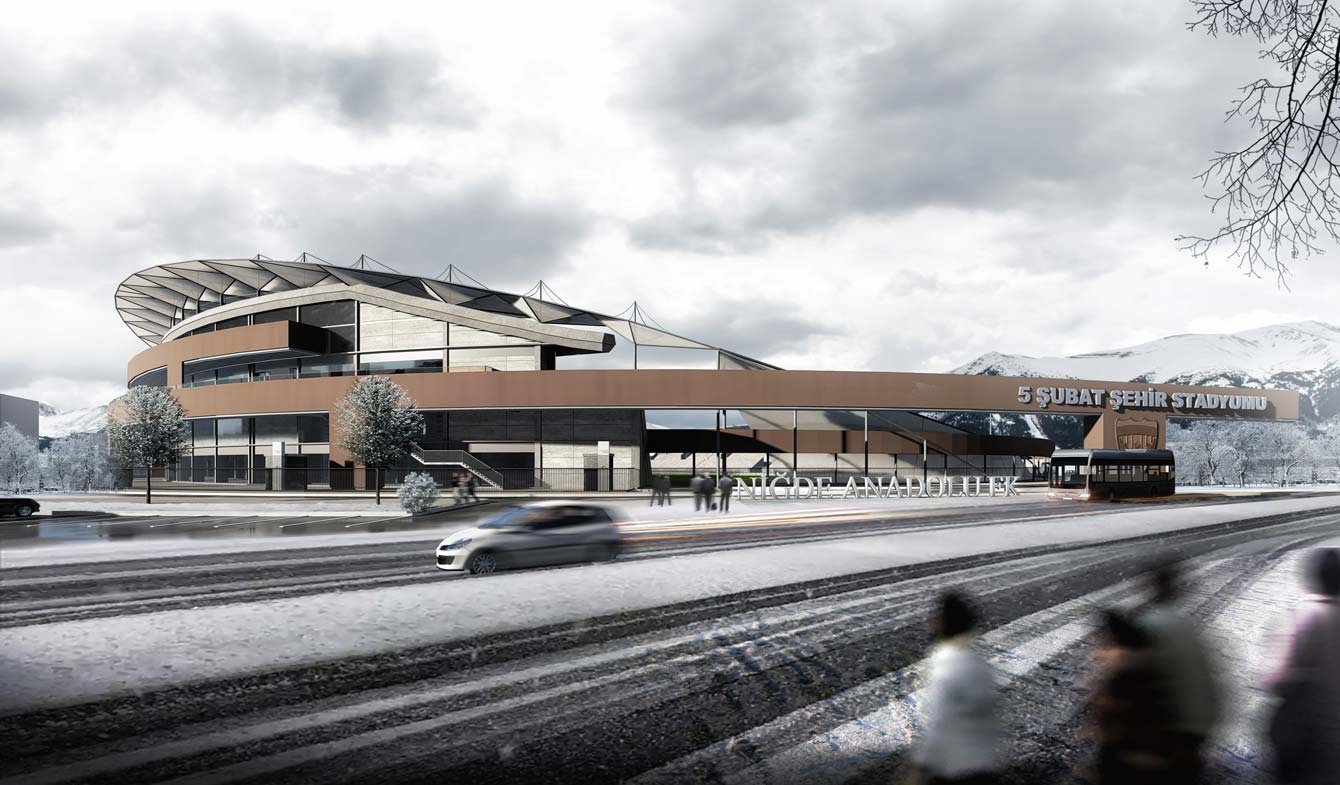
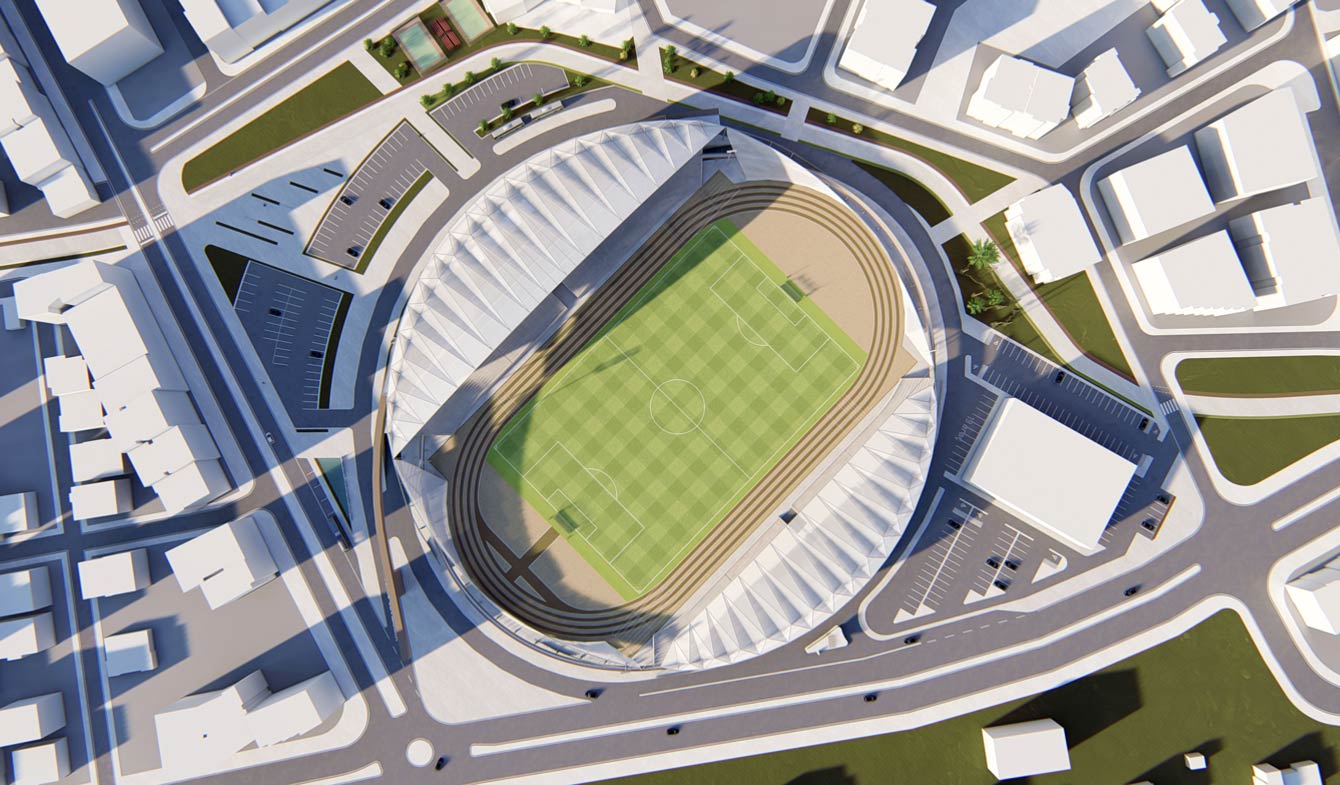
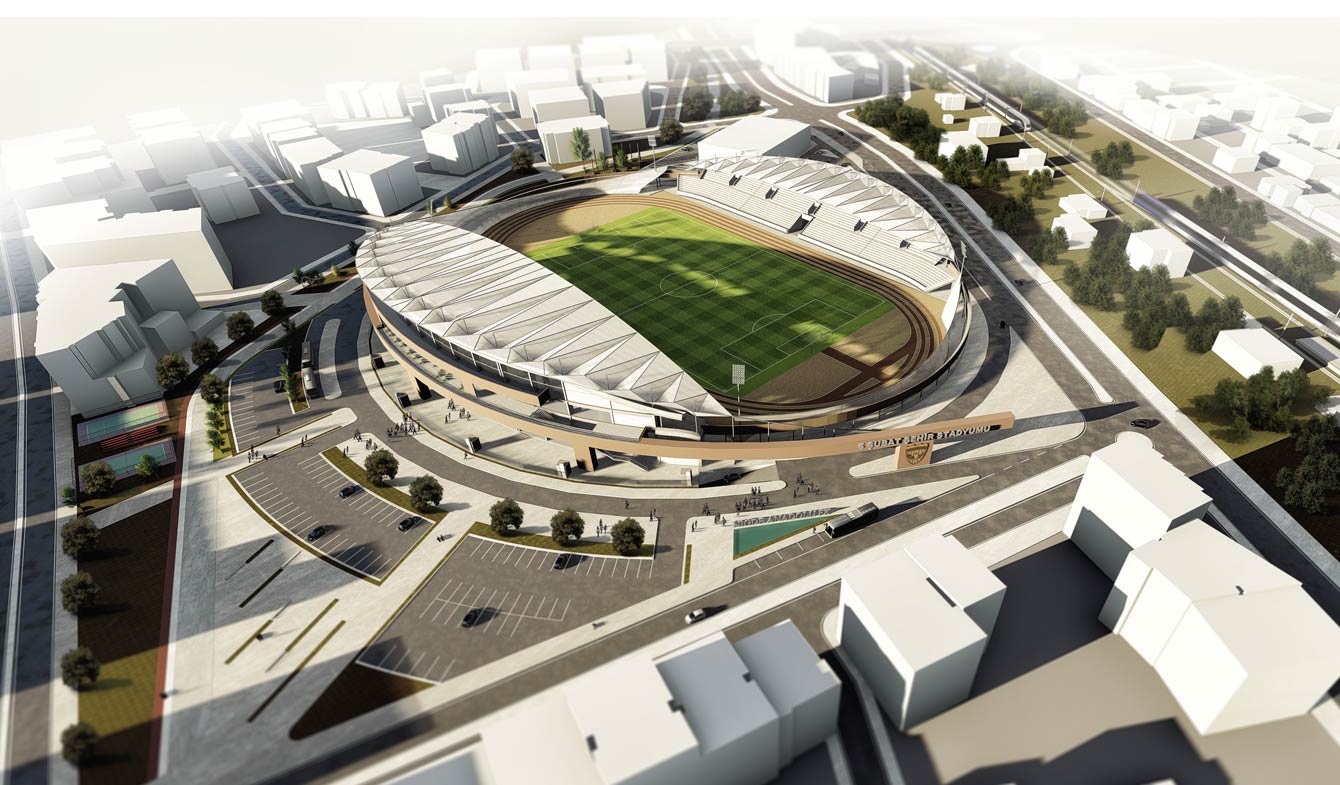
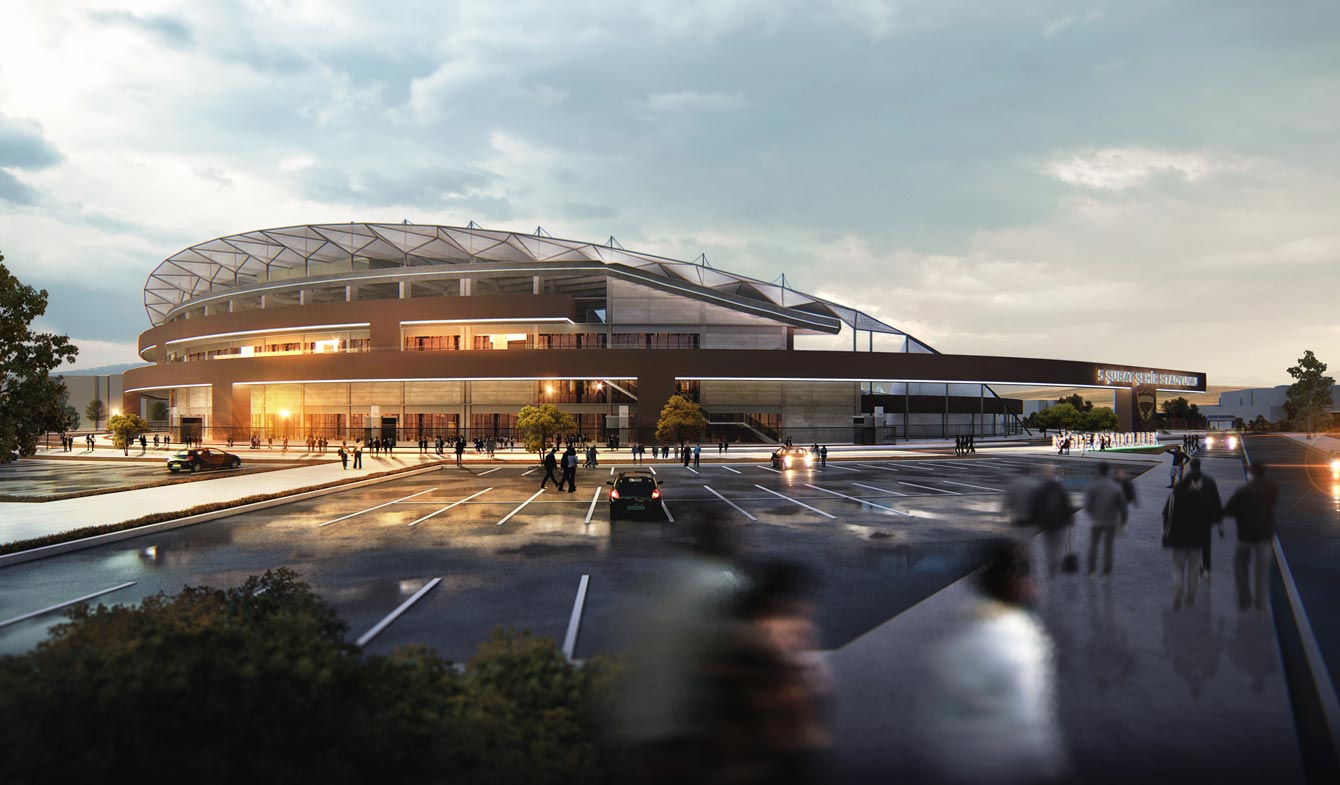
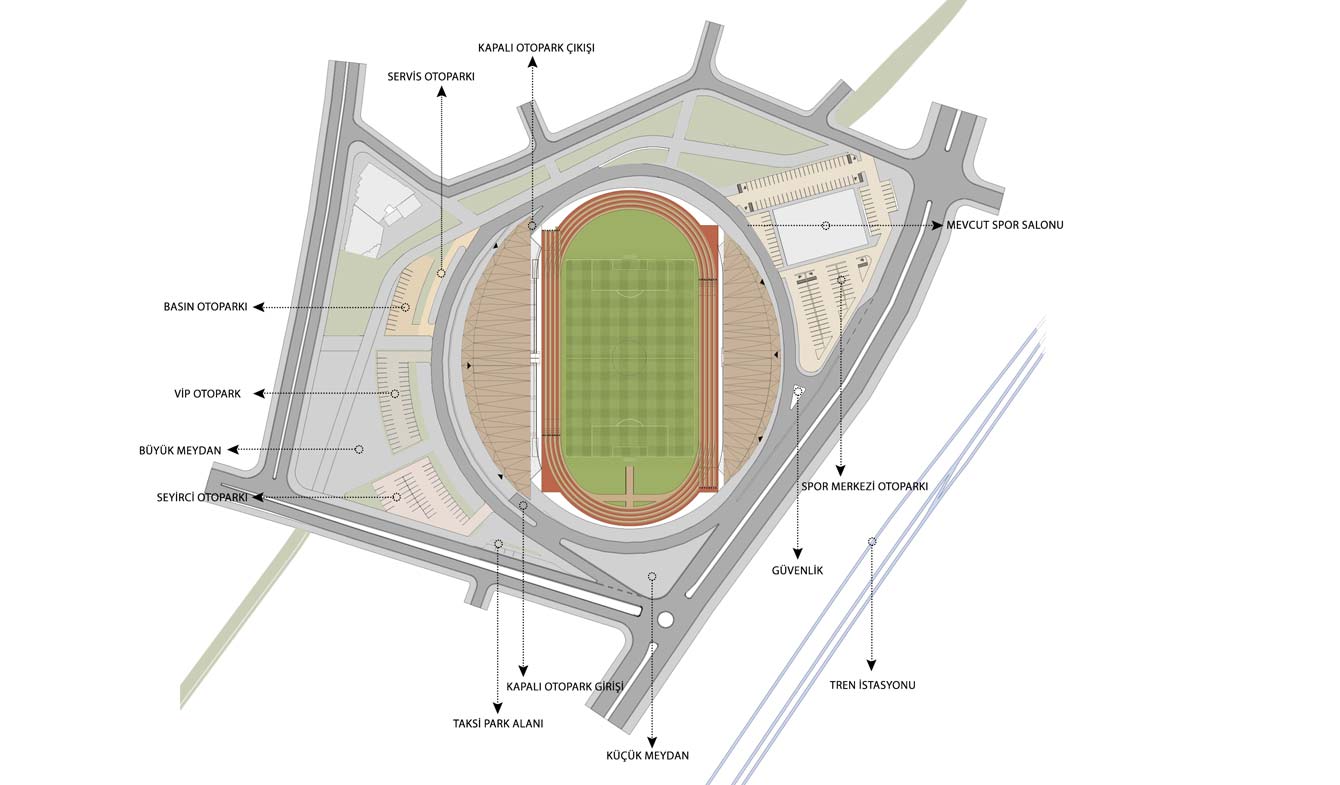
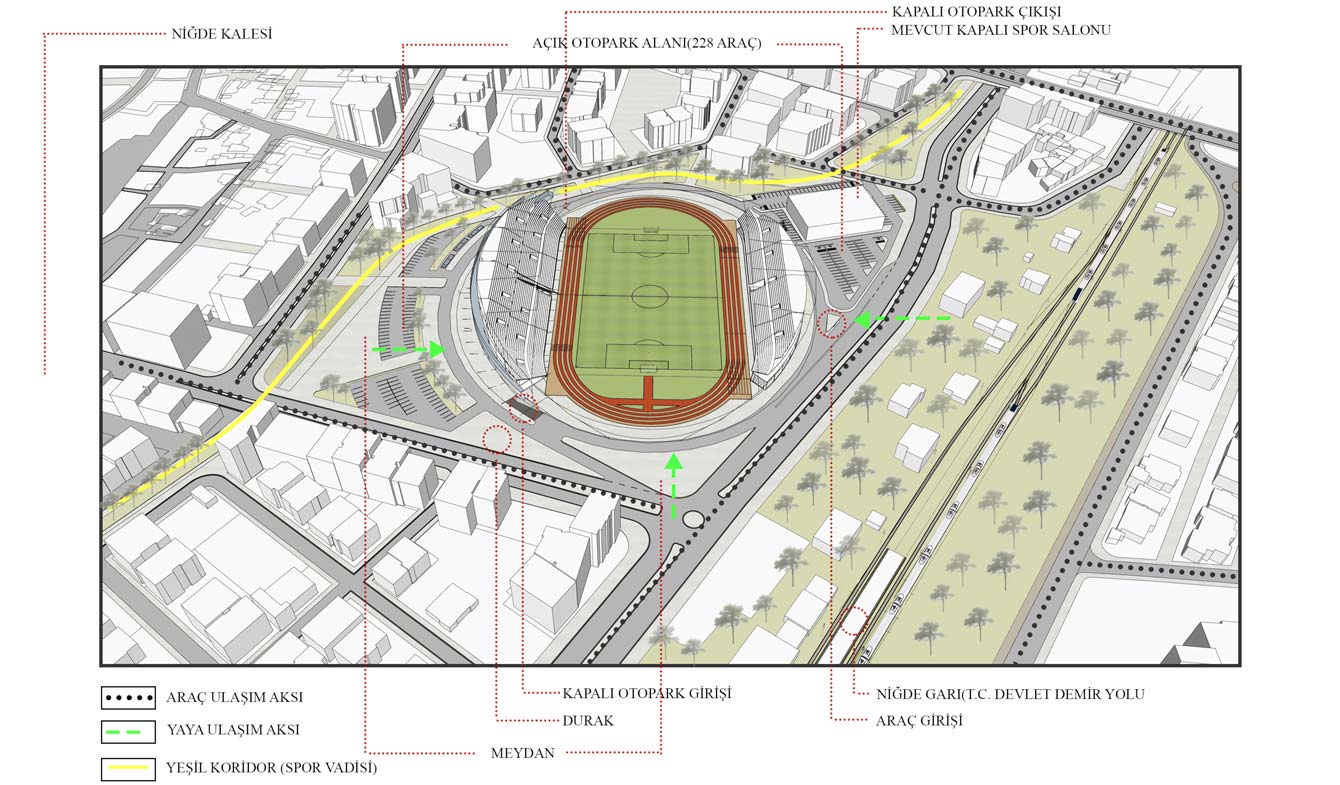
The subject of the project is the design of the “Niğde 5 February City Stadium Complex.” The design encompasses a complete sports complex, including green spaces and artificial turf fields where various sports activities are held. The site is located within the existing stadium complex and is bordered by a canal to the west. The proposed landscape design is flexible enough to maintain its function even if the canal is preserved, rehabilitated, or covered. Sufficient space for security and accessibility is required for a 10,000-seat stadium, as specified by standards and regulations. Therefore, it is proposed that the existing training field be relocated or reduced in size to a different area.
AN ECOLOGICAL AND SUSTAINABLE STADIUM
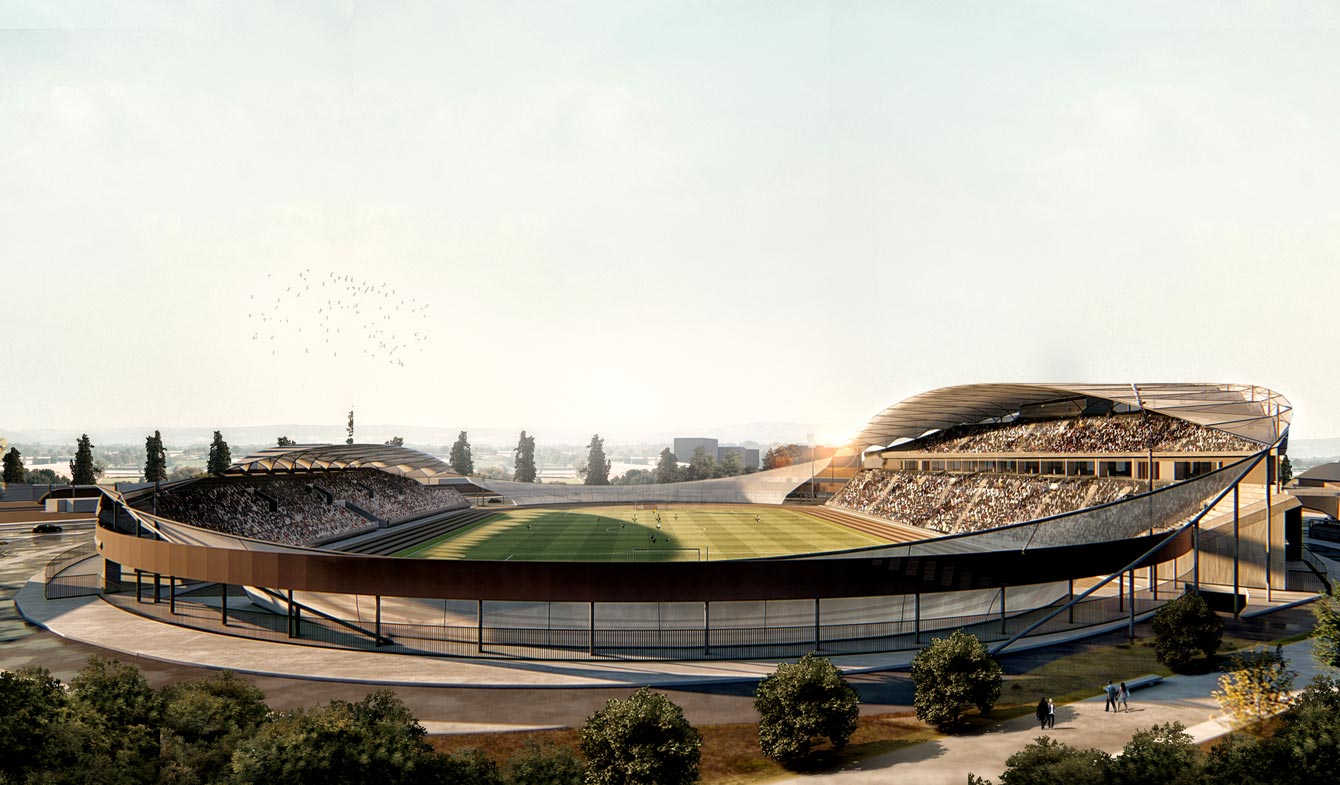
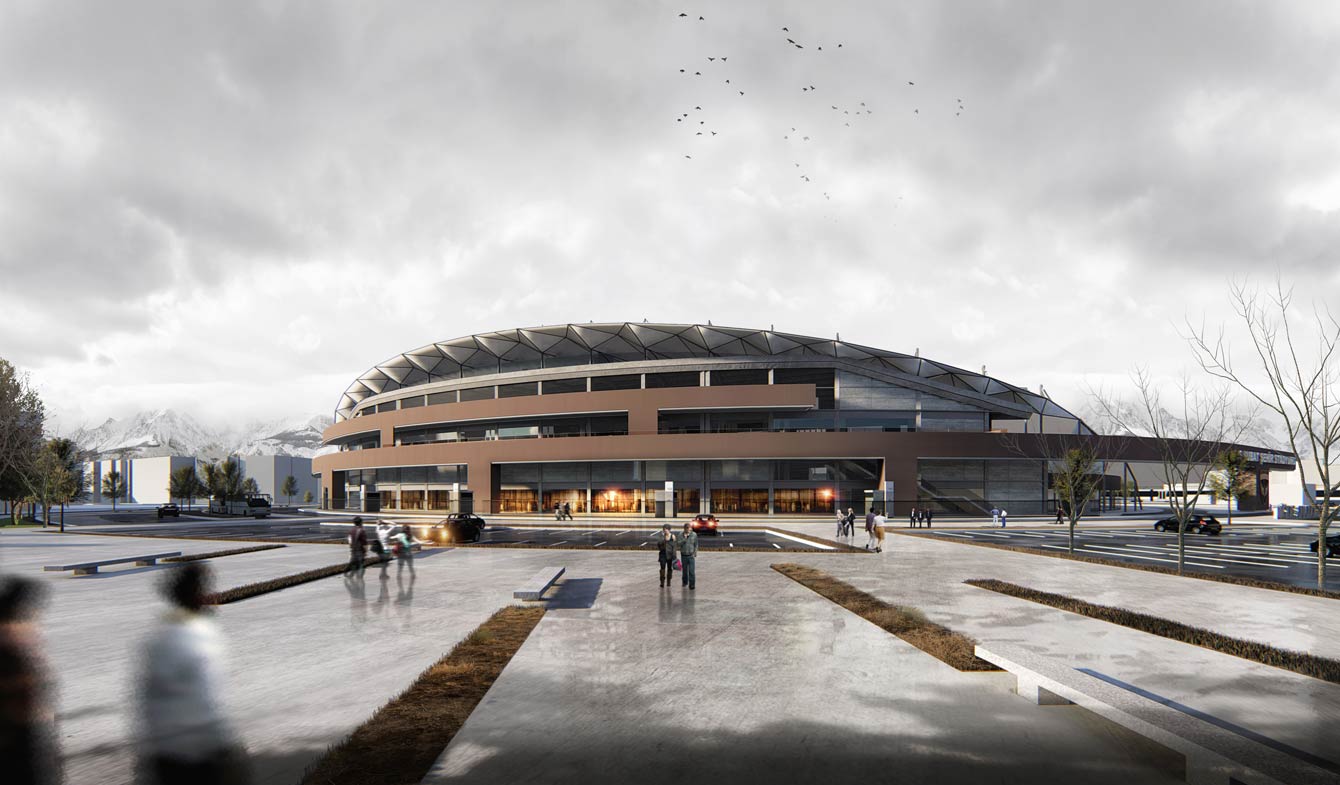
The designed stadium is integrated into its surrounding landscape with an energy-efficient architectural approach. Therefore, design decisions were made considering topographical data, urban and geographical context. Efforts have been made to use local and sustainable regional materials in the structure.
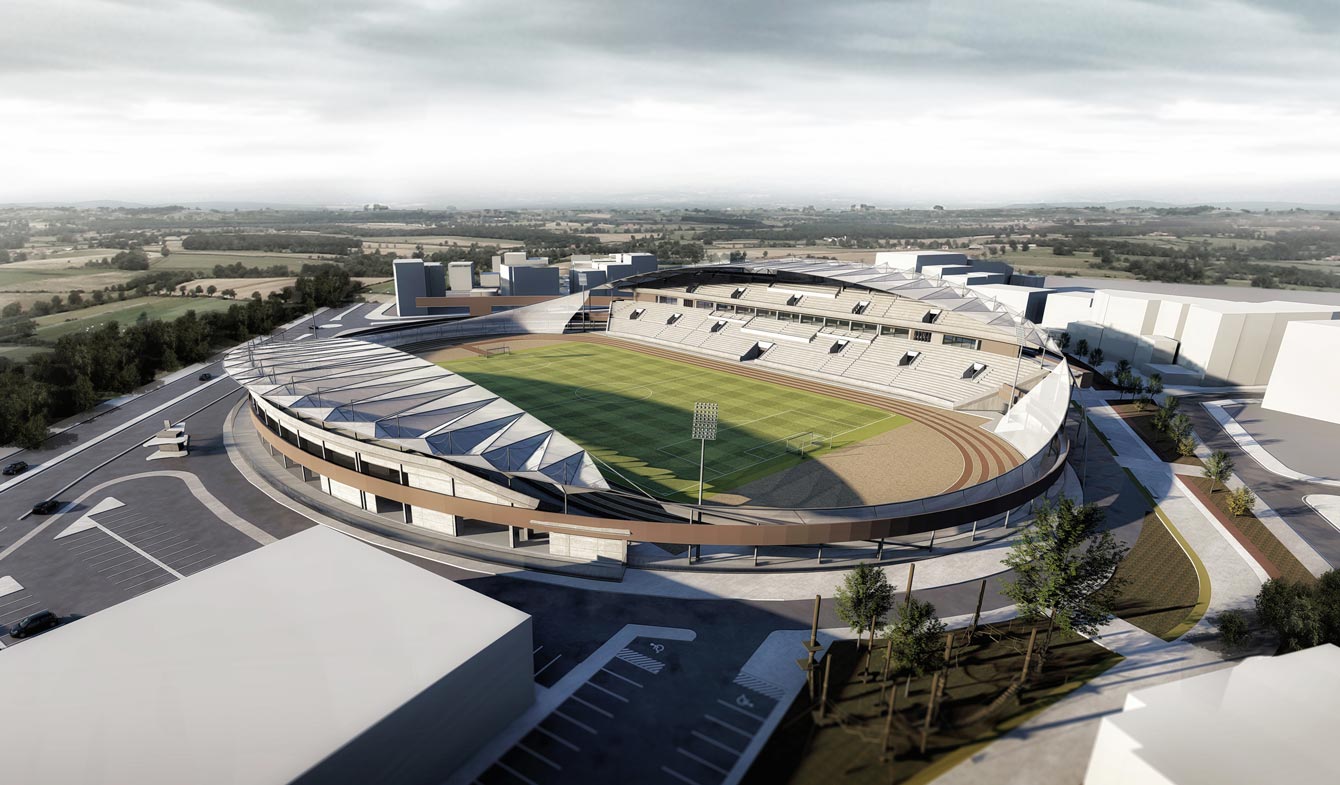
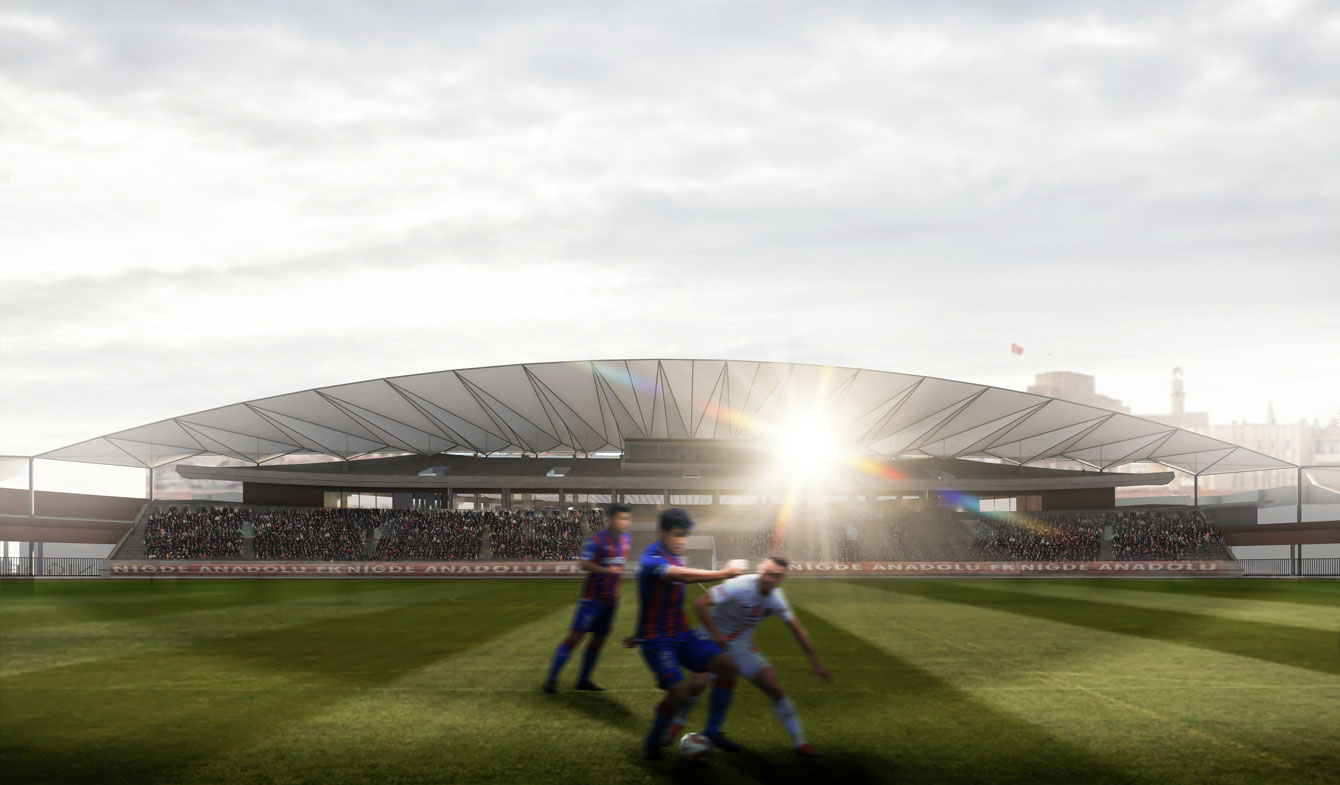
In line with Niğde’s hot, dry climate, the stadium’s design aims to provide comfortable, cool spaces in summer and warm spaces in winter for the spectator foyers, considering the overall heat transfer coefficient of the building shell. The stadium roof utilizes a lightweight steel system supported by Teflon material, an economical and up-to-date material. This material in the building shell absorbs the scorching summer sunlight, ensuring optimal temperature for the stands under the roof. Simultaneously, ventilation of heated air is achieved through openings in the side facades using passive wind energy. The convex curves on the side facades of the building create shaded areas around the structure. The roof geometry enhances the building’s plastic effect while, thanks to the cisterns that collect rainwater, the stored water can be reused for landscaping and especially for watering the field.
In its final form, the Niğde 5 Ocak Stadium aims to be one of the region’s exemplary sports facilities, based on the principles of social, economic, and climatic sustainability.
CAPACITY OF 10,000 SPECTATORS